
Almost a year ago, planning began for the annual Ahmadiyya Muslim Youth Association (AMYA) event—an engaging weekend of brotherhood, spiritual learning, and a chance to be close to His Holiness Hazrat Khalifatul Masih V (aba). From a marketing perspective, our mission was clear: one event, 7,000 members, and to drive as much traffic as possible to the website.
Planning kicked off at the end of July 2024, with a communications strategy designed to maximize engagement across all channels.
Communication Cycle
AMYA’s communication channels include email, social media, and app push notifications. Early on, we identified a common misconception: using the same message everywhere doesn’t work. Each platform demands its own style and length.
To improve click-through rates, we shortened captions wherever possible and inserted a clear call-to-action link in every promotional message.
Doing so ensured that members could immediately reach the website for more details—no scrolling, no hunting around.
Website Uplift
Since the website had to serve as the central hub for all event information, we completely restructured it into key sections that provided immediate value to visitors:
- Homepage
The redesigned homepage offered concise, high-impact information: date, location, a brief event overview, and direct links to major sections (registration, schedule, FAQs)
- Blog
To accommodate both detail-oriented readers and those looking for a quick snapshot, we launched our “What to Bring to National Ijtema 2024” blog post.
Built in Elementor, it used an accordion format to break down questions and answers into bite-sized, interactive sections. Visitors could click on each question to see a concise answer, reducing information overload and encouraging exploration of other site features.
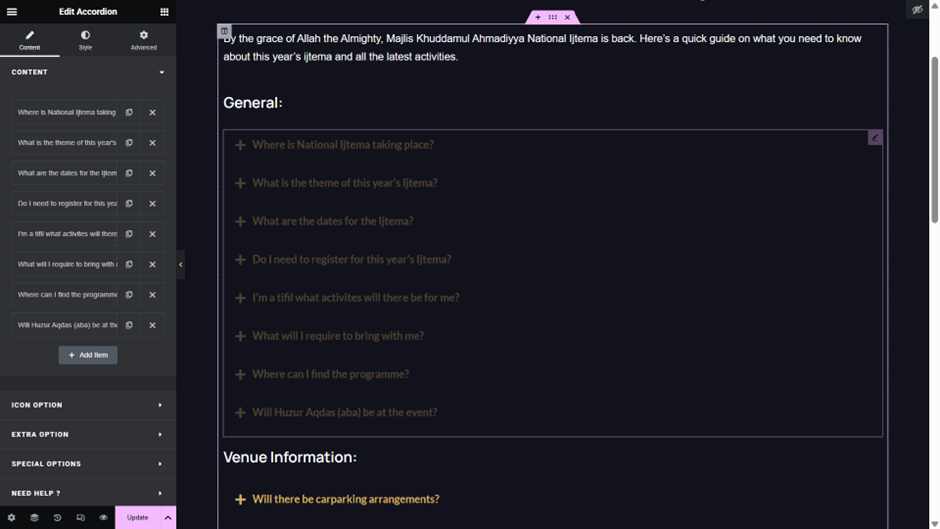
As this was early stages of the marketing process for the National AMYA event, only 246 views were achieved.
Additional blog posts covered topics such as travel tips, on-site entry procedures, and the background of the “National Ijtema 2024” theme. Because AMYA members are always eager to deepen their understanding of Islamic history and spirituality, we kept each article short, easy to read, and focused on one core subject.
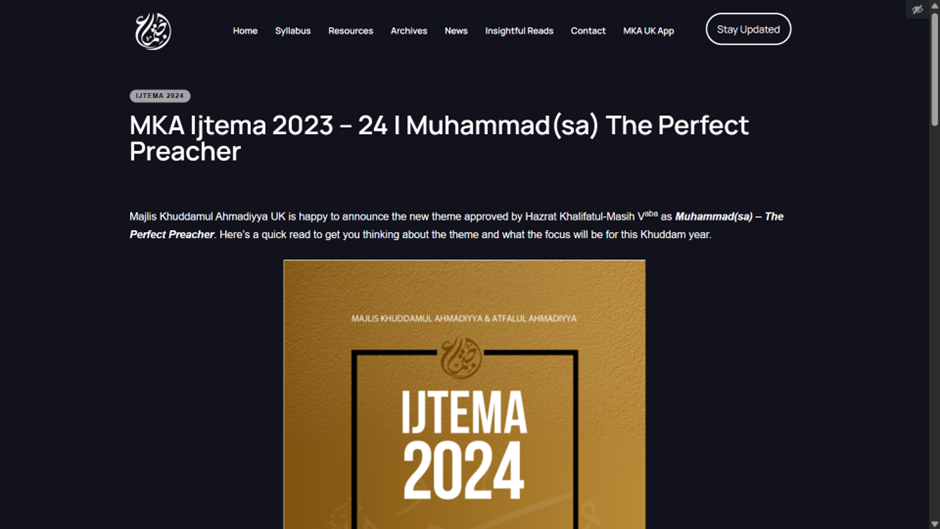
To promote the blog posts, we relied primarily on MKA UK app push notifications. Our attempt to use WhatsApp broadcast messages fell flat: long paragraphs and dense formatting did not resonate with our mostly young, mobile-focused audience. As a result, the initial background of the event’s theme article only achieved 196 views during its launch window.
Interactive Syllabus Feature:
One of our most successful website features is the Interactive Syllabus. Built using ACF Pro (Advanced Custom Fields) and a Custom Post Type, this page allows members to explore various syllabus modules tied to the event theme.
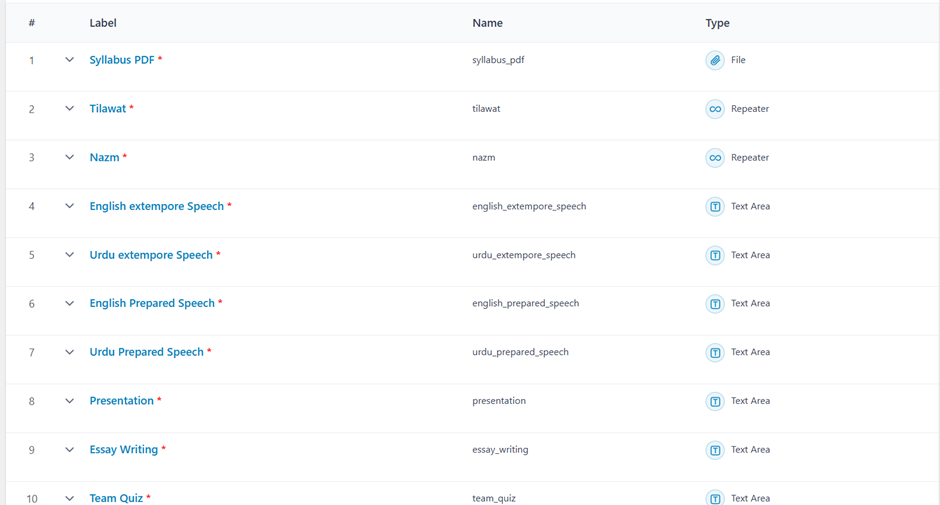
Because all syllabus items live on a single page, visitors can easily click through topics without reloading or navigating away.
Behind the scenes, JavaScript pre-loads content into unique <div> elements based on each competition or session, eliminating URL conflicts and the need for extra pages.
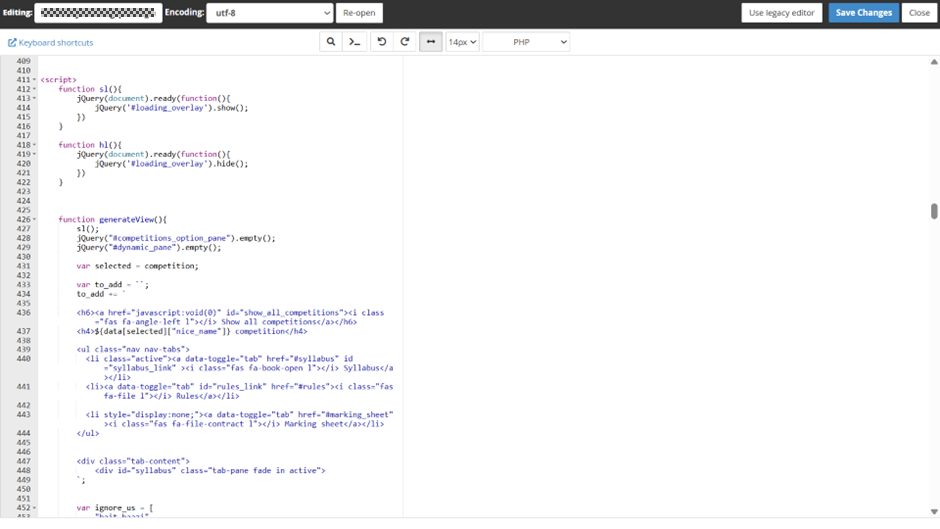
This feature alone averages around 1,000 views per month.
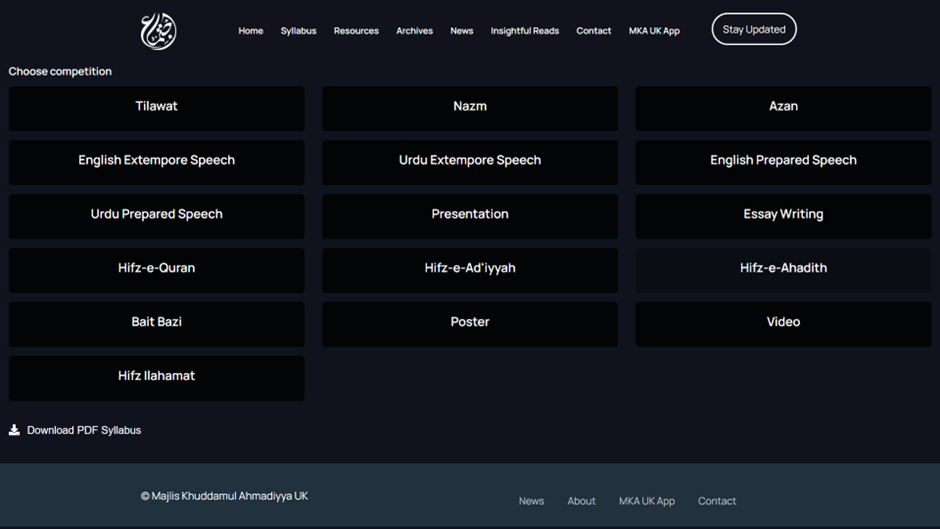
A minor but important technical challenge was integrating Arabic text: selecting a web-safe font that displays correctly on all devices can be tricky, so we tested multiple font families to maintain consistency and legibility.
Interactive Programme:
Another innovation was the Interactive Programme. Initially suggested by an AMYA committee member (inspired by AMYA Canada’s event app).
I personally decided against a standalone mobile app. Instead, I proposed that we build a mobile-first web interface and embedded it directly into the MKA UK app.
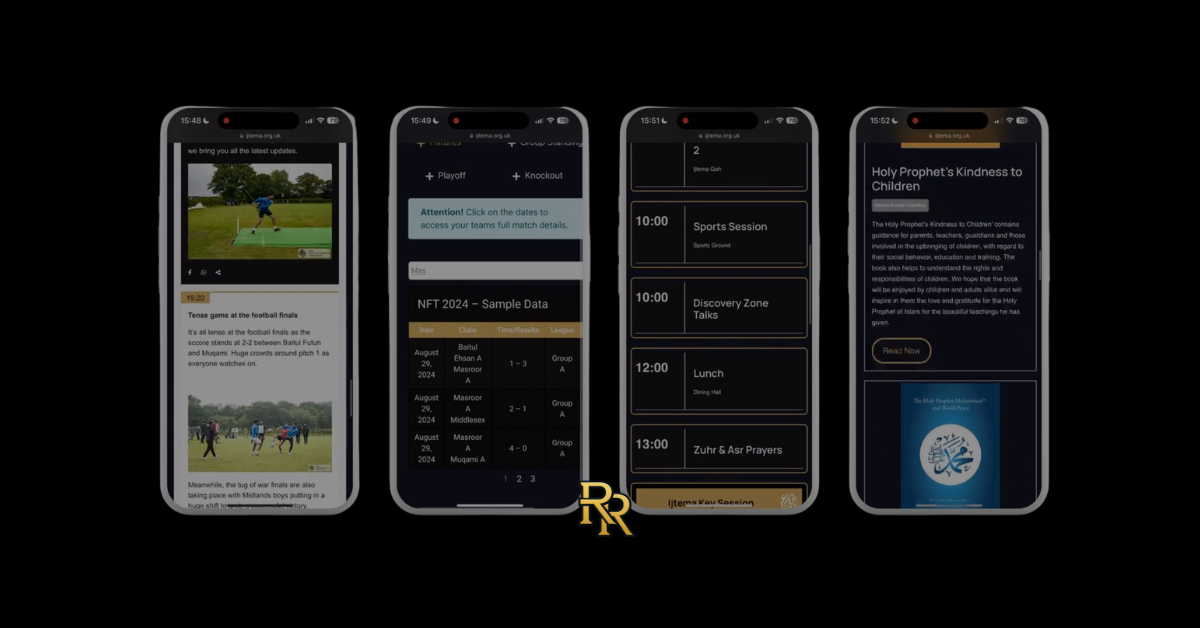
Using a similar ACF Pro structure, each day’s activities—talks, sessions, and speakers—are presented in swipeable tabs optimized for touchscreens.
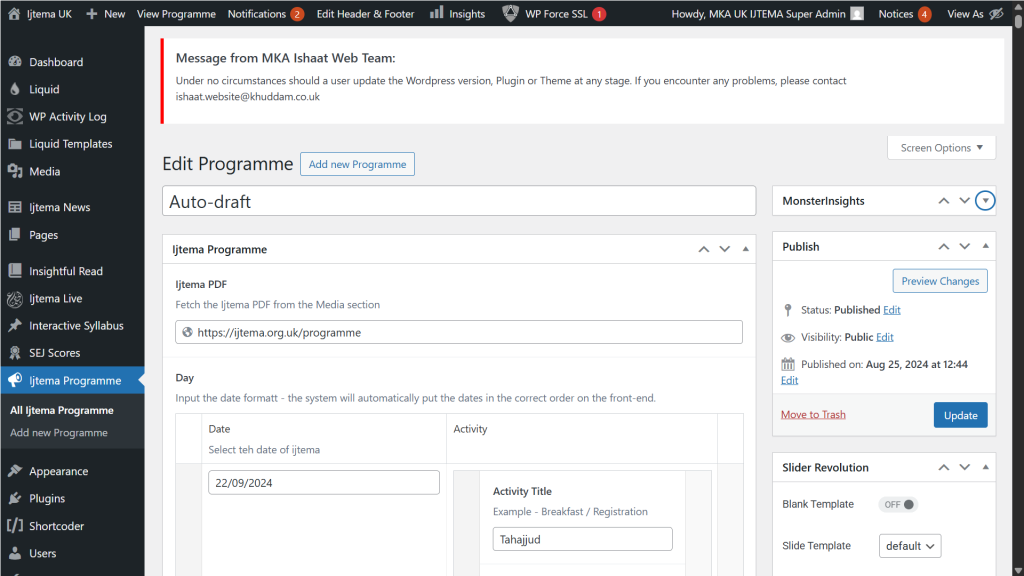
Recognizing that 95% of our traffic comes from smartphones, we prioritized a mobile user experience over desktop compatibility.
Tabs let users switch between morning, afternoon, and evening sessions with a single tap; key speakers’ profiles and discussion topics are displayed with bold headings and high-contrast buttons.
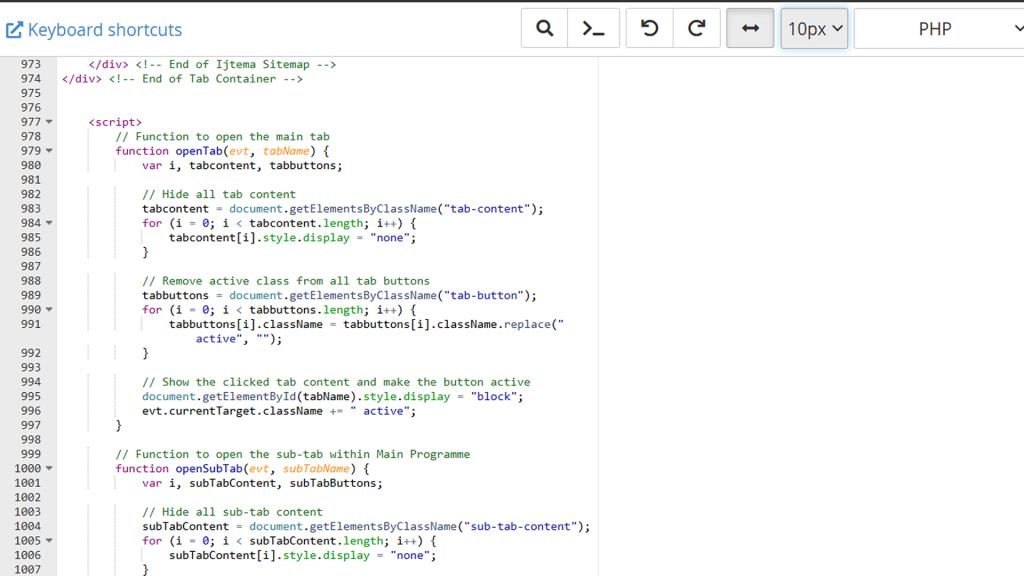
For the main programme details, a logical code structure was implemented to add sub-tabs accordingly to however many days were pre-set in the above CP/UI of the Interactive feature.
Other elements were adapted, but the main focus was to ensure that this programme was more than mobile friendly and provided an interactive and engagement touchpoint for users.
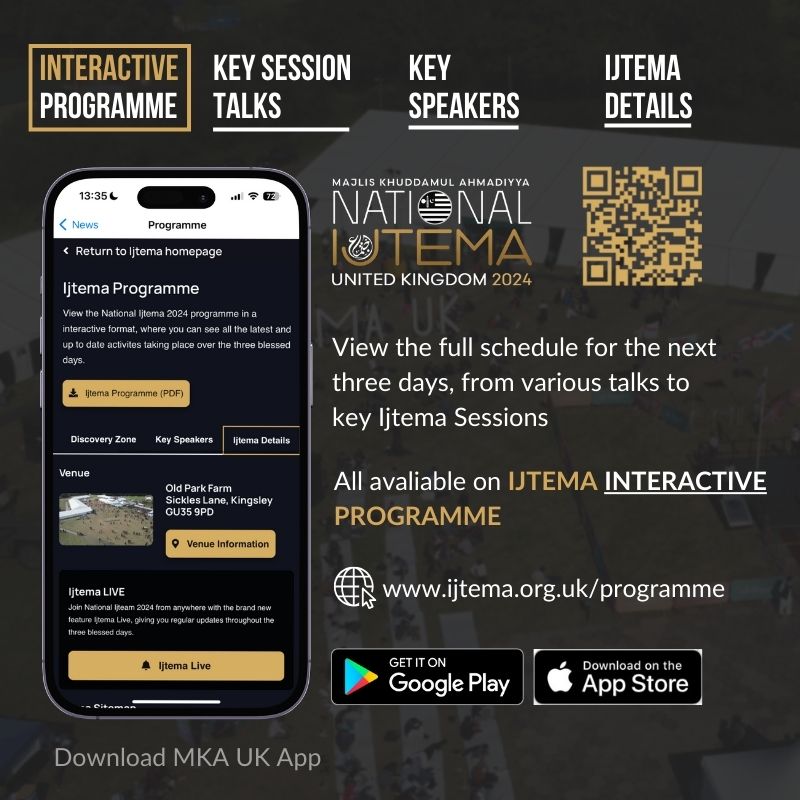
By focusing on intuitive navigation and clear visual hierarchy, we ensured that attendees could quickly find the various activities around the national event.
Sports Session Feature:
Within the AMYA National Event, sports are a crucial segment — creating a sense of brotherhood, team spirit, and unity as everyone comes together to take part in friendly competitions. Whether it’s team sports or individual athletics, the audience is always engaged.
This gave me an idea of how we could use the physical audience and keep them engaged throughout the next three days.
We initially resourced a plugin called SportsPress Pro, using an existing license from another website, and added the AMYA National Event’s website to the package. However, due to the limitations of this plugin, we decided it would be best to scrap it — and instead, I took on the challenge of creating my own custom plugin.
Having never created a plugin before, I knew that various coding techniques would come in handy. Through watching several tutorials and reading a range of resources, I was able to build the desired structure.
The aim was to create a dynamic, tailored plugin that would exceed the expectations of the sports team.
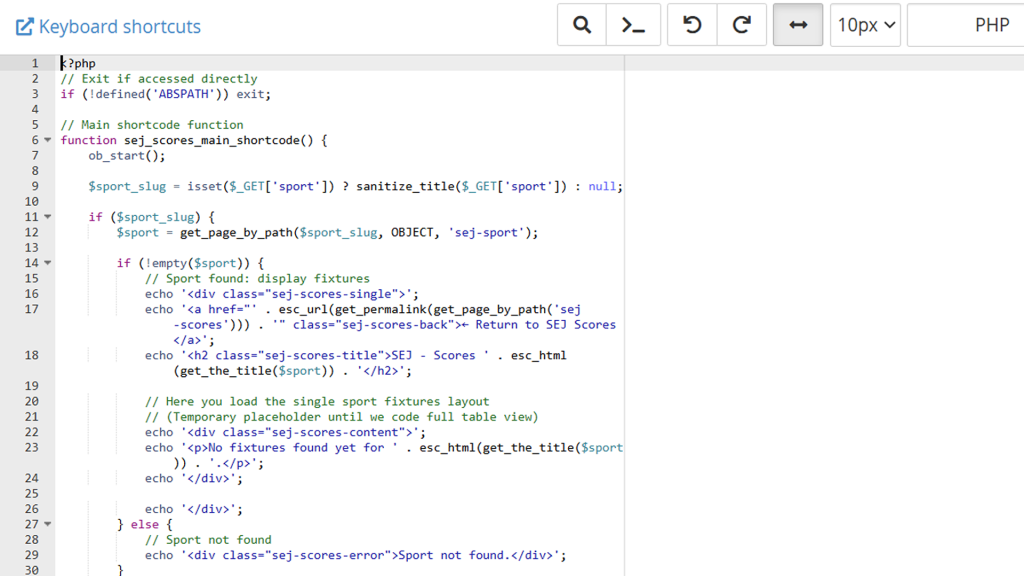
I built a structure through WP-Admin and the functions file to ensure the user interface was easy to manage and fully controllable. For every new sport created, a dedicated table would automatically be generated and displayed.
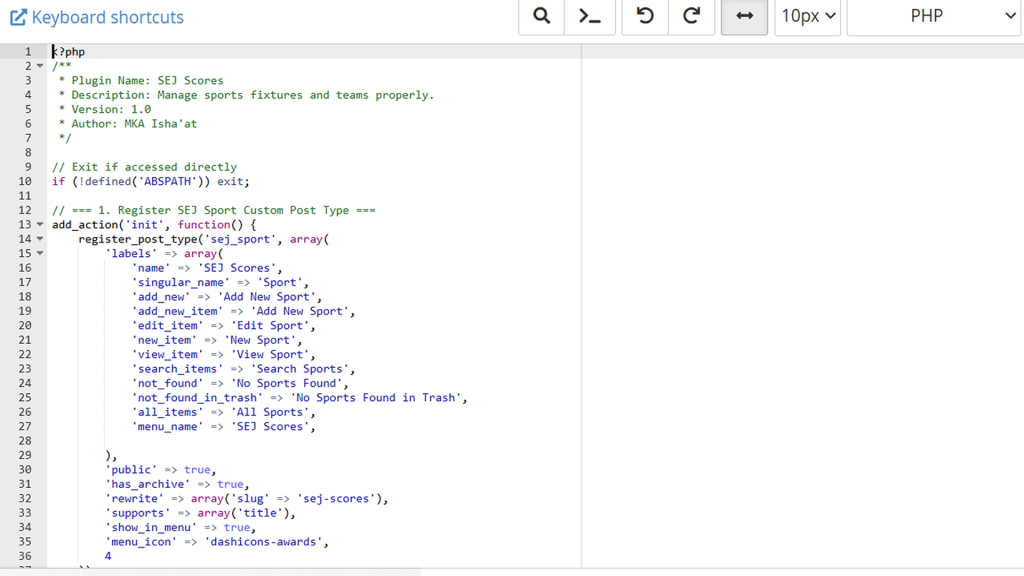
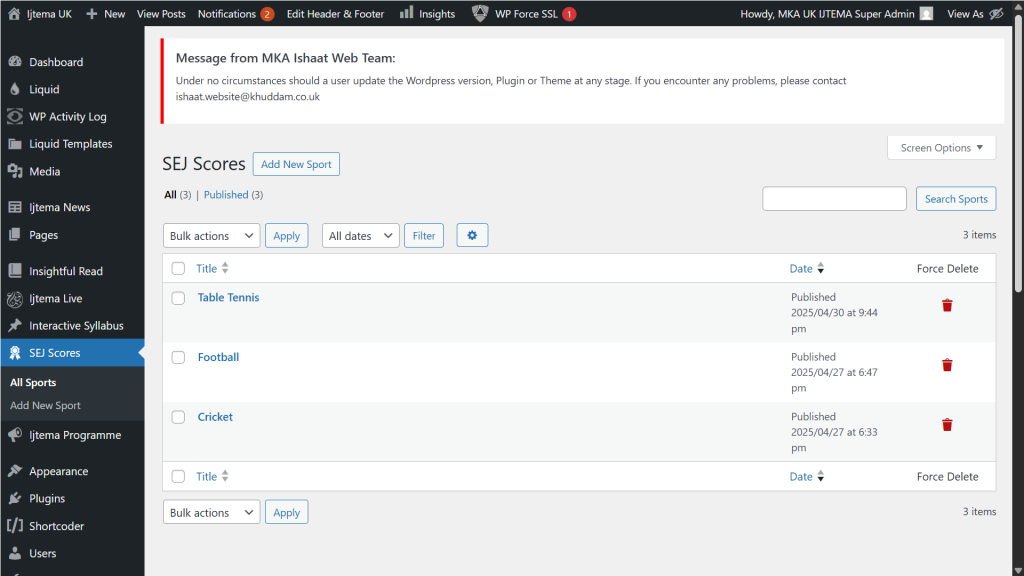
To handle the entire fixtures setup, I created several repeater fields to ensure the output and design were clean and adaptable.
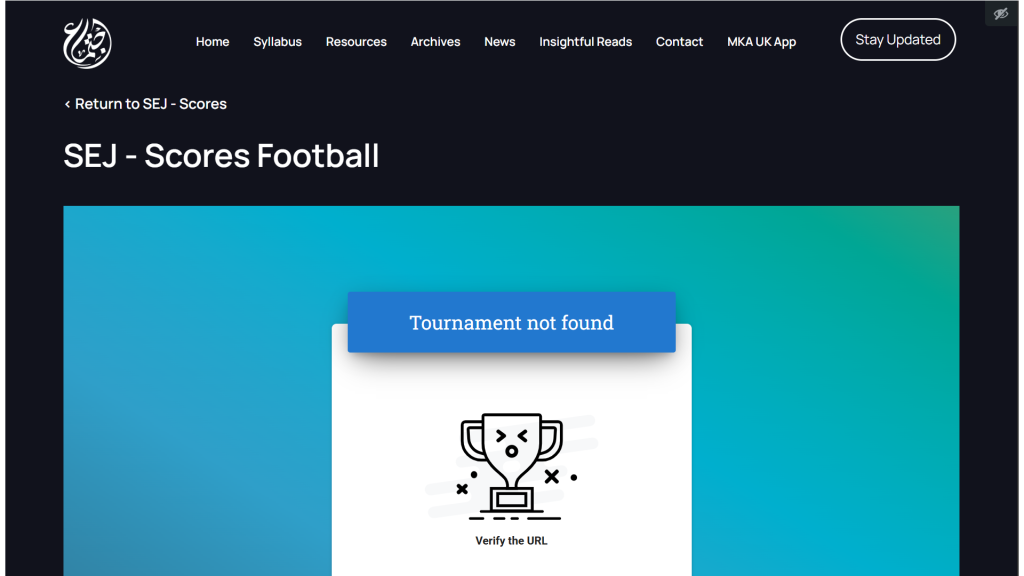
For each sport, a fixtures table would be generated with all the relevant details. However, for Football, there was a special condition: the team preferred to use a third-party platform. So, I coded the logic to check whether the sport is set to “Football” — if so, it would display only the field for the third-party platform link, hiding all other fields.
This link would then be publicly rendered using an iframe for everyone to view.
The overall design and structure were also crucial — since the majority of users would be on mobile and the team planned to integrate this into the MKA UK app, it was essential that the output was not only mobile-friendly but also interactive.
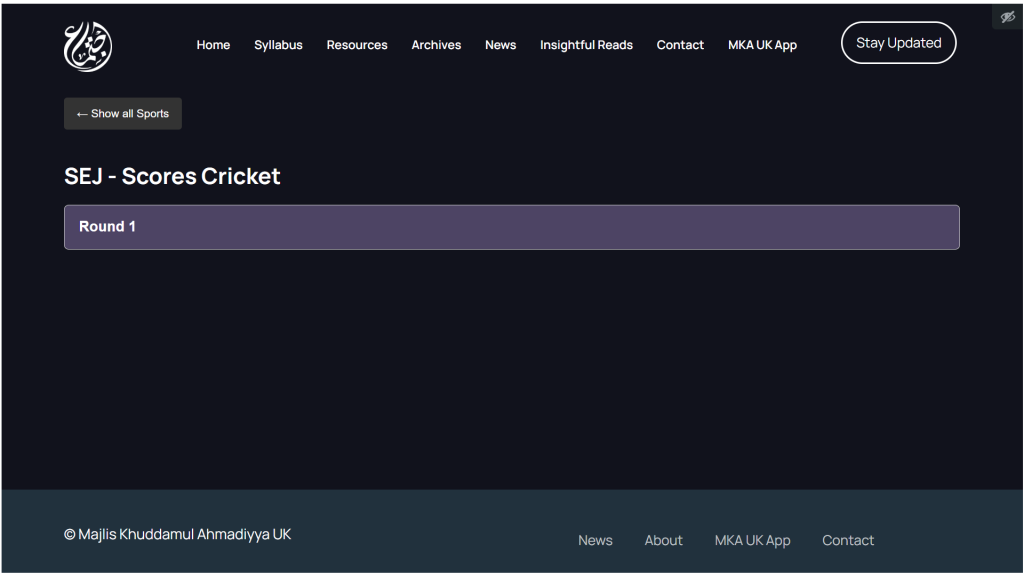
To achieve this, I implemented a dropdown tab section (accordion-style interface). The purpose of this was to avoid overwhelming the user with information, giving them the control to view what they want, when they want.
The system works intelligently based on the number of rounds and games set within each fixture by the sports team.
The final output is slick, dynamic, and easy to use.
Final Takeaway:
The intention at the beginning of this whole campaign was always about making the website as engaging as possible.
It was never our goal to achieve such a massive number of views, followers, and active users. When I analyzed the data from previous years, two things became clear:
-
Features drive engagement. Engagement is determined by the touchpoints through which users experience the content.
-
Culture and background are key. AMYA members are encouraged not only to participate in academic and sporting competitions but also to deepen their understanding of our faith and improve their acts of worship in accordance with our pledge.
To achieve 35,000 views in space of a month was mind blowing, from changing the communicational cycle to providing a series of highly engaging and interactive features for users to experience with.
It makes me think what can be done next year to keep the same level of engagement?
The challenge awaits.